The Lamp-in-Every-Corner Myth
The lamp-in-every-corner myth can crowd a room without helping. Check existing light and the activity in each dim spot before choosing a fixture.
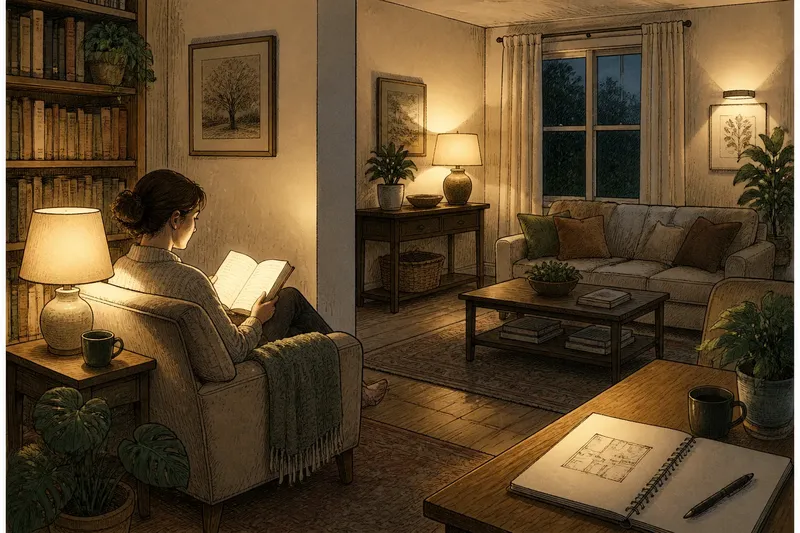
The lamp-in-every-corner myth can crowd a living room without fixing the problem: a dim patch may need a better-aimed light, or no added light at all. Before buying another floor lamp, check what the existing fixtures illuminate and what you actually do in that corner.
Start with the room’s use
Darkness is not automatically a defect. A quiet corner beside a bookcase may be a place to pause, while the same dimness beside a sewing basket can make close work frustrating. Decide based on the activity, not on whether every part of the room looks equally bright.
Walk through the room at the time you use it. Sit where you read, eat, talk, or work. Identify the specific difficulty: reading small print, finding an object, seeing someone’s face, or moving around comfortably. If none of those activities suffers, the corner may not need its own lamp.
Consider how the room changes after sunset. A space that feels balanced in daylight may become uneven when the window stops contributing. The answer might be a lamp near the activity, a better-directed existing fixture, or leaving a low-use area softly lit.
Check existing light
Before adding a fixture, switch on the lights you normally use together. A ceiling fixture can leave a corner shaded, but a table lamp across the room may already send useful reflected light toward it. Pale walls, a light ceiling, and reflective surfaces can spread illumination beyond a lamp’s direct beam.
Look at the lamp’s direction and shade. An opaque shade may send light upward or downward, leaving nearby surfaces dim. A translucent shade may spread light more broadly but provide less concentrated illumination for reading. Temporarily move a portable lamp to see whether it can serve the corner as well as its current spot.
Notice shadows. A person seated between a lamp and a book can block the light, while a lamp behind a screen may be hidden from the area it is meant to brighten. Placement, rather than a shortage of fixtures, may be the problem.
- Check whether the ceiling and portable lights you use in the evening are on; if the corner remains dim, inspect their direction before adding a fixture, otherwise keep the current setup.
- Check the corner from the seat or work surface; if the activity is hard to see there, adjust or add nearby task lighting, otherwise judge it by how the room works rather than its view from the doorway.
- Check whether furniture, a lampshade, or your seated position blocks the beam; if it does, move the obstruction or reposition the lamp, otherwise look for another cause.
- Check whether light reaches the corner indirectly from a wall or ceiling; if it does, see whether that reflected light serves the activity, otherwise try a different lamp position or source.
- Check whether an existing portable lamp can be moved without disrupting its current task; if it can, try the new position before shopping, otherwise keep it in place and consider a separate fixture only if a need remains.
- Check whether a bright-looking corner is comfortable from the actual reading or work position; if glare or shadows interfere, change the beam direction or shade, otherwise leave the arrangement as it is.
Make the observation from the position where the light matters; a corner that looks bright across the room can still be poor for reading.
Match light to activity
For reading or close work: Add task lighting near the activity if the page or work surface remains hard to see. A desk lamp, adjustable reading lamp, or wall-mounted fixture can direct light where it is used. Keep the light out of your direct line of sight and check that your hand does not cast a shadow over the work.
For conversation: A table lamp beside seating may help faces feel less shadowed, but a lamp in every corner is not a rule. Turn on the room’s existing lights and notice whether people can see one another comfortably. If one seat remains gloomy, a lamp near that seat may make more sense than filling an empty corner.
For a display: Leave the corner alone unless the object deserves attention after dark. A picture light or carefully aimed fixture can highlight artwork or a plant, but decorative lighting adds another visual element and pool of brightness. If the object is not a focal point, a dim corner can help the room retain contrast.
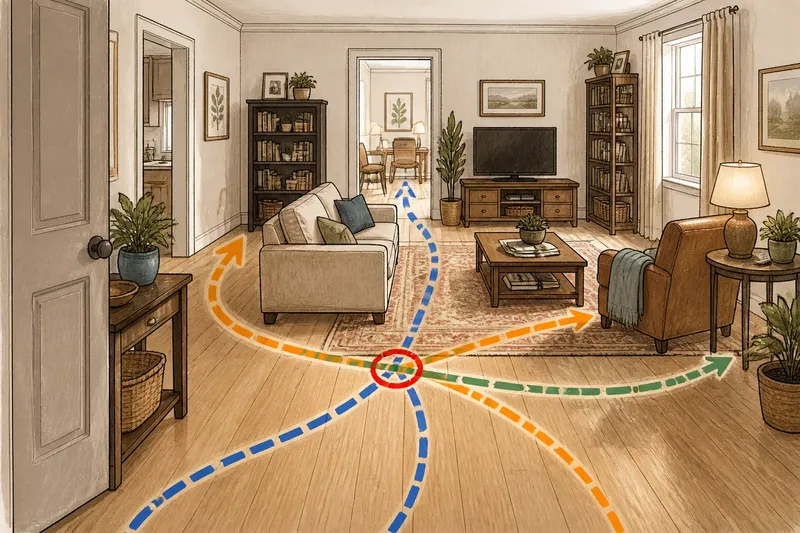
For a passage: Prioritize seeing the route and avoiding obstacles rather than lighting the entire corner evenly. Check whether the existing overhead or nearby light reaches the path. If it does not, place appropriate lighting near the route; the fixture need not sit in the farthest corner.
For occasional use: A portable lamp may suit changing needs better than a permanent fixture. If the corner is rarely occupied, switching on a nearby light when needed may be enough. Choose a new lamp only when its use is clear and its position works with the room’s circulation.
Does a dark corner need a lamp?
Does every dark corner need its own lamp?
No. Add a lamp when darkness interferes with a real activity, comfort, or safe movement. A quiet, unused corner can remain dim without making the whole room feel unfinished.
Can one lamp light more than one area?
Often, if its position and shade send light toward both areas without glare. Try the lamp in place and check the result from each seat or work surface that depends on it.
Is a ceiling light enough for a reading corner?
It may be if the page is comfortably visible and your body does not cast a troublesome shadow. If close work remains difficult, add task lighting near the page rather than relying on a general fixture across the room.
Should I choose a floor lamp or a table lamp?
Choose according to the available surface, seating, and beam direction. A floor lamp can fit beside a chair without a table, while a table lamp can keep light close to a sofa or desk; neither is automatically better.
Try a temporary change
Say you have a living-room corner with an armchair, a side table, and no lamp. At night, reading feels strained, but a table lamp across the room makes the bookcase look bright. Move that portable lamp to the side table for an evening, then check whether the page is easier to see and the rest of the seating still feels comfortable. If reading improves but another activity becomes poorly lit, the result points toward a more suitable fixture or placement; if the change does not help, return the lamp and reconsider its direction or shade.
For a corner with no regular task, switch off its nearby lamp while leaving the room’s other lights on. If conversation, movement, and the room’s appearance still feel comfortable, the extra fixture may not be earning its place. Judge the room in use, not by an empty floor plan.
Choose a suitable fixture
When another light source is useful, match it to the job. A focused reading lamp directs light toward a page; a shaded table lamp can soften the area around seating; a wall-mounted fixture can free up a small table. For indirect light, choose a fixture that sends light onto a nearby wall or ceiling to soften contrast without putting a bright beam in someone’s eyes.
Check the lamp’s shade, bulb compatibility, placement, and controls before choosing. A dimmer or separate switch can help the room serve different activities without keeping every source on at once. Follow the lamp and bulb maker’s instructions, and check local requirements where relevant.
Consider the fixture’s footprint as well as its light. A large floor lamp can crowd a narrow path; a table lamp needs a stable surface and room for the items already there. A fixture that looks useful in a catalog may not fit beside the chair where its light is needed.
Keep useful shadows
A room does not need uniform brightness to feel considered. Light and shadow help distinguish a reading spot from a passage or display area, while too many bright pools can compete for attention. Keep the corners that support a task well lit, then let low-use areas stay quieter.
For the lamp-in-every-corner myth, name the activity, check existing light from the place where that activity happens, and add a fixture only if a specific need remains. That gives you lighting shaped around the room’s routines, not a row of lamps placed to fill empty corners.