One Sofa, Two Arrangements: Face the Window or the Conversation?
Sofa facing window or conversation? Choose an arrangement that suits your living room’s main activity while keeping other seats, views, and focal points in play.
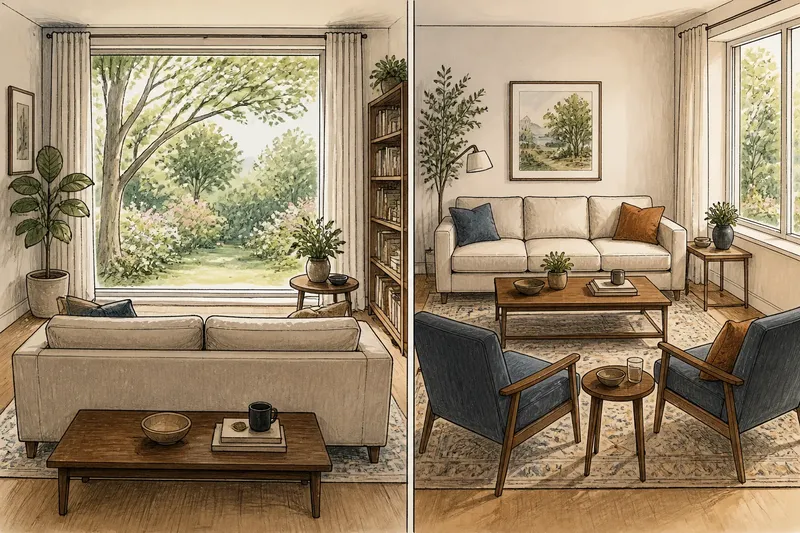
A sofa facing the window makes the view the room’s focal point; a sofa facing other seats makes conversation easier to begin. For a sofa facing window or conversation decision, start with what people actually do in the living room, then arrange the sofa to support that activity without overlooking daylight, a television, or the room’s proportions.
Choose the main activity
Recall what happens in the room on an ordinary day. Do people settle in to watch the garden, read beside the window, or keep an eye on the street? Or do they gather to talk, play a board game, or share a drink? The answer matters more than a conventional rule about where a sofa belongs.
List the room’s regular uses and rank them. Give the most frequent or meaningful activity priority. Occasional guests may matter, but the arrangement does not need to revolve around them if the room is mainly used for quiet evenings.
Notice how many people usually use the sofa and whether they sit together or spread out. A long sofa aimed at the view may suit people who like to sit side by side and watch the changing light. A pair of seats angled toward one another may work better for conversation, even if the sofa remains the largest piece.
Write the room’s main activity in one sentence and keep it nearby as you consider the furniture.
Read the window view
Not every window needs to become the sofa’s destination. Look at the view from seated height, not just while standing. A tree canopy, courtyard, or open sky may be rewarding to look at; a blank wall across a narrow gap may not justify turning every seat toward it.
Check the view at the times you use the room. A window that feels inviting in the afternoon may show a dark reflection after sunset. You can still orient the sofa toward it, but consider whether the arrangement will feel pleasant when the outdoors is no longer the main visual feature.
Consider how the sofa relates to the window. Placed directly in front of it, the sofa may make the opening feel blocked from some angles. Turned toward it, the sofa may leave the view visible without putting its back across the room. A low-backed sofa or open-sided arrangement can help preserve a sense of openness, depending on the room.
Take a seat in the sofa’s likely position. If the view feels worth turning toward, treat it as a serious candidate for the room’s focal point.
Map conversation seats
For a conversation-led arrangement, people should be able to look toward one another without twisting around a large table or shouting across a wide gap. The sofa does not have to face another sofa squarely. Two chairs turned slightly toward it can create a more natural grouping and keep the room from feeling like a formal waiting area.
Think about where people will sit, not only where the furniture will stand. If the sofa faces a window and the only other seats are beside it, conversation may still work. If everyone is lined up in one direction, however, the room can feel more like an audience facing a screen than a place to talk.
Try turning one chair inward before committing to a full rearrangement. A slight angle can bring its occupant into the group while leaving a view of the window. A small side table between seats can connect the grouping without forcing every piece into a rigid circle.
Keep the intended conversation partner visible from the sofa’s main seats. If people would need to turn their whole bodies to speak, revise the orientation.
Account for focal points
A living room may ask the sofa to relate to more than one feature. A television, fireplace, bookcase, or art wall can compete with the window and conversation area. Identify which features people use or look at most, then decide whether each should share attention with the view or take precedence.
If the television is used regularly, check whether the sofa can face it without putting conversation seats behind the main viewers. A shallow angle may serve both purposes: the sofa can point toward the screen while a chair and side table turn the group toward one another. If the screen is rarely used, avoid letting it dictate the entire arrangement by default.
A fireplace may provide a natural gathering point, but it need not determine every seat’s direction. Consider placing the sofa at an angle that keeps the hearth visible while leaving the window in view. One feature can take the primary position while another remains a pleasant secondary view.
Choose one main focal point and one secondary one. Trying to give every wall equal priority can leave the sofa facing none of them comfortably.
Compare layouts on paper
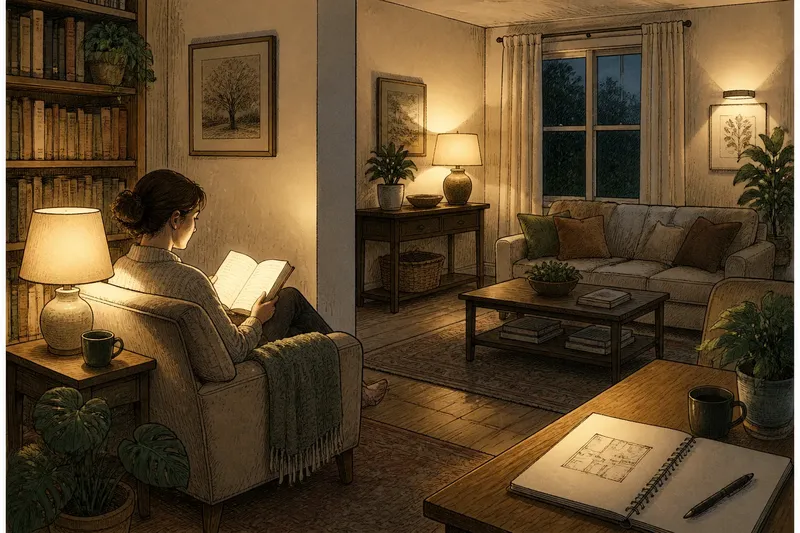
Before moving a heavy sofa, sketch the room from above on plain paper. Mark the windows, doors, television, fireplace, and furniture that must stay. Draw the sofa in two orientations: one directed toward the window and one toward the conversation area. Add the chairs and coffee table to each version.
Use the sketches to compare how the arrangements behave. Note which seats have a clear view, where conversation would happen, and whether the coffee table sits within easy reach. Mark any area that would feel unused or cut off.
Say you have a sofa, two armchairs, a low coffee table, and a broad garden view, but most evenings are spent talking. In this invented situation, sketch the sofa facing the chairs, then angle the chairs so their occupants can see the garden too. The expected result is a seating group directed toward conversation, with the view still visible from several seats.
Paper cannot tell you whether the arrangement feels comfortable from the sofa. Use it to narrow the options, not to make the final decision.
Check each layout
- Check whether the seated view from the sofa is appealing; if it is, consider facing the window, but if it is not, orient the sofa toward another focal point.
- Check whether people can see one another from the main seats; if they can, keep the conversational grouping, but if they must twist around, turn a chair or reposition the sofa.
- Check whether the television is used regularly; if it is, include it in the sofa’s sightline, but if it is rarely used, let the room’s regular activity set the orientation.
- Check whether the sofa’s back blocks the window from common viewpoints; if it does, try a lower-backed sofa position or turn the sofa, but if the opening remains visible, keep comparing other factors.
- Check whether the coffee table is within easy reach from the main seats; if it is, retain its position, but if people must lean across someone else, move the table or adjust the seating.
- Check whether a doorway or route through the room feels cut off; if it does, redraw or shift the arrangement, but if the route remains clear, proceed to a seated trial.
Resolve common questions?
When should a sofa face the window?
Face the window when the view is a regular reason to use the room and the layout still supports other important activities. This can suit a quiet reading spot or a place to watch a garden, especially when other seats can turn inward for conversation.
When is a conversation layout better?
Orient the sofa toward other seats when people mainly gather to talk, play, or spend time together. A sofa and angled chairs can make conversation feel direct without blocking every view.
Can the sofa serve both purposes?
Often, the sofa can face the room’s main activity while nearby chairs provide another sightline. Try an angled chair or a seat beside the window rather than forcing the sofa to point halfway between competing focal points.
What if the room has a television?
Decide how often the television is used, then include it in the same priority list as the view and conversation. If it matters regularly, let the sofa face it and use chairs or a small table to create a conversational edge to the grouping.
Move furniture with care
Once you choose a promising direction, clear small objects from the sofa and its route. Ask someone to help move it, and lift rather than dragging it across the floor. For a heavy or awkward piece, use furniture-moving equipment suited to the floor and follow its instructions; do not try to manage the load alone.
Move the sofa into place, then add the other seats one at a time. Sit in the main positions before placing the coffee table. Check whether the window remains visible, faces are easy to see, and people can reach a side table without leaning across someone else.
Spend an ordinary evening using the arrangement rather than judging it only from the doorway. Notice which seats people choose and whether they turn toward the view, one another, or another focal point. If the room’s actual use differs from the plan, adjust the seats rather than defending the original sketch.
Furniture labels, manufacturer instructions, and local rules may affect safe movement or placement. Follow the guidance that applies to your sofa and home.
Adjust the arrangement
After living with the new arrangement, identify one specific problem to solve. Perhaps the view is pleasant but the sofa blocks conversation; perhaps the seats face one another but leave the window outside everyone’s sightline. A small change in a chair’s or table’s position may resolve the issue without restarting the layout.
When the choice is close, favor the arrangement that supports the room’s most regular use, then preserve the other purpose where possible. A sofa facing conversation can still share a view through a nearby chair; a sofa facing a window can still belong to a welcoming group if companion seats turn toward it.
The useful question is which direction makes the room’s main activity feel natural while keeping other valued features in view. For a sofa facing window or conversation, let the choice follow how you use the room, then make a small adjustment if the seated view or conversation still feels awkward.