The Doorway Test: Why Furniture Routes Matter
Use the doorway test to spot blocked paths, awkward turns, and furniture that interrupts daily routines, then adjust your layout with clearer, practical choices.
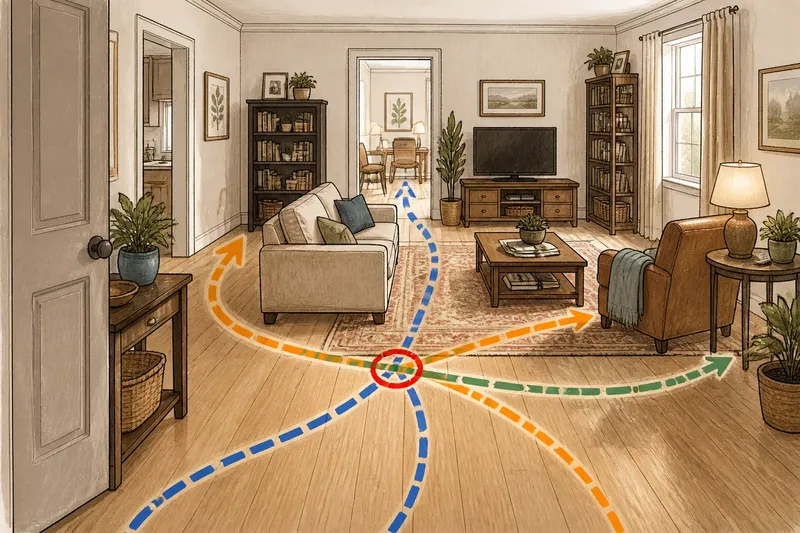
The doorway test for furniture routes shows where a room interrupts ordinary movement. Stand at an entrance and trace the walk to a chair, closet, window, desk, or another doorway. If you turn sideways, step around a table, or cross someone else’s activity, the layout may be making a routine harder than it needs to be.
A useful room does not need to look empty. It needs to connect furniture to the tasks it supports while leaving people a clear way through. Start with one awkward route, identify its obstruction, and change one thing at a time.
Start at the doorway
Choose a routine that actually happens. Imagine entering with a laundry basket, crossing the living room to reach a bookcase, or walking from a bedroom to a closet. Begin at the doorway and follow the route without moving anything. Notice where you slow down, turn sideways, reach around an object, or step into the space where someone is sitting.
Check the room’s main entrances and its connections to other rooms. A path that works from the hall may not work from the kitchen or patio. In a shared room, trace different routines: one person watching television, another carrying a drink, and someone else reaching a shelf may all use the same area.
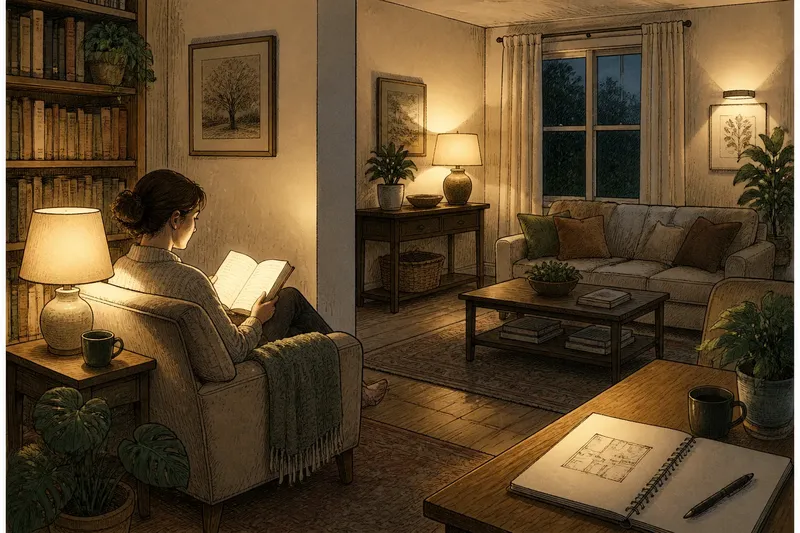
Sketch the room on paper and draw each route as a line. Mark where paths cross or bunch together. Exact dimensions are not necessary for this first pass; the sketch should make recurring conflicts easy to spot.
Check the door swing
A door that catches a chair, hits a cabinet, or stops short may be competing with furniture for space. The obstruction is not always the largest nearby piece. A side table, floor lamp, or storage basket can occupy the area the door needs.
Open the door as you normally would and check its full arc, including the place where someone stands to pass through. Move the obstructing item if another location serves it just as well. For a substantial piece, consider another wall or orientation, while making sure the change does not block a more important route.
Say you enter a sitting room and the door nudges a narrow console. You move the console to the wall beside the bookcase, where it can still hold keys. The expected result is a door that opens without contact and an entrance that no longer requires a detour around the console.
Keep paths out of seating
If someone repeatedly walks between a seated person and the television, fireplace, or conversation area, the easiest route may be cutting through the room’s working center. Moving a chair slightly may not help if people still cross the same activity.
Trace the trip from its real starting point to its destination. Look for a path along the room’s edge, behind seating, or through another opening. Reorienting a chair or shifting a table may help, but keep the space people need to sit down, stand up, and reach nearby surfaces.
If there is no edge route, decide which activity should take priority. A passage through a rarely used corner may disrupt the room less than a path through the main seating area. Try a temporary change with a lightweight chair, then walk the route again and check whether the new path causes another interruption.
Make turns easier
A route can be open and still feel clumsy. A tight turn near a coffee table, a narrow gap beside a dresser, or a chair angled into a walking line can make people twist or shuffle. Often, the issue is not the straight part of the route but the approach and turn at its destination.
Notice where a turn begins and ends. Someone carrying a basket needs space to approach a closet and turn toward it; someone pulling out a dining chair needs room behind the chair as well as a path past the table. Move the nearest piece away from the corner of the route, then walk through while carrying the object that usually makes the trip awkward.
Keep the approach to a doorway or storage unit easy to read. A technically open gap may still be hard to use. For clearances involving accessibility needs, mobility devices, or local requirements, consult applicable guidance or a qualified professional.
Put support items nearby
A clear route does not solve every inconvenience. A reading chair may be far from its lamp switch, a desk may be difficult to reach without crossing a work area, or a hamper may sit behind a door. These problems often come from a mismatch between furniture placement and routine, rather than a lack of floor space.
Trace the whole task, including small transitions. Laundry might involve entering the room, reaching the hamper, opening a closet, and carrying clothes back out. Reading might involve approaching a chair, setting down a book, switching on a light, and leaving without moving a table. Place support items where the route naturally brings you to them.
Before moving an item closer, check that it will not obstruct another route. A basket beside a chair can be convenient, but it should not sit in the path to the door. Keep items used together near each other while preserving a clear connection between destinations.
Compare competing routes
In a busy room, one person’s route may cross another person’s task. A path from the kitchen to the hall might pass through a place where someone plays on the floor; the route to a closet might overlap with the working space of a desk chair. These conflicts appear when furniture is arranged around one activity at a time.
Compare the routes instead of judging each one alone. Mark the shared area, then ask whether one trip can use another approach or whether furniture can define separate zones without blocking access. Turning a desk chair toward a wall may keep its working space out of the main passage. A low storage piece can mark where play ends and circulation begins, as long as it does not become a barrier.
Change only the item responsible for the overlap, then retrace both routines. If one person gains a clear route while another must detour, the conflict has moved rather than disappeared.
What should you change first?
Which route should I check first?
Begin with the route used most often or the one that causes the most hesitation. A path from the entrance to a daily-use destination is a sensible starting point because interruptions recur during ordinary routines.
Should I move large furniture first?
Start with the smallest object that clearly causes the problem, such as a stool, basket, or side table. If the route still feels interrupted, test a larger change, such as shifting a chair or changing the direction of a sofa.
How can I judge a new arrangement?
Walk the route at a normal pace and repeat the task that exposed the problem. Check the approach, turn, destination, and exit; an arrangement has not solved the issue if it is easier to enter but harder to leave.
What if I cannot create another route?
Give the most important routine a direct path and remove or relocate less-used objects that compete for the same space. If the room must meet specific access needs, ask a qualified professional for guidance rather than relying on a visual guess.
Retest the layout
After each adjustment, return to the doorway and trace the same routes again. Check doors, corners, seating approaches, storage access, and transitions between activities. Look for new problems too, such as a blocked drawer, a chair that cannot be pulled out, or a route redirected through someone else’s work area.
Before adding a floor basket, replacing a chair, or moving a table, consider which route the object will occupy. Furniture routes are part of how a room works, not leftover space after decorating. Use the doorway test for furniture routes to check how a proposed change affects the paths you rely on every day.